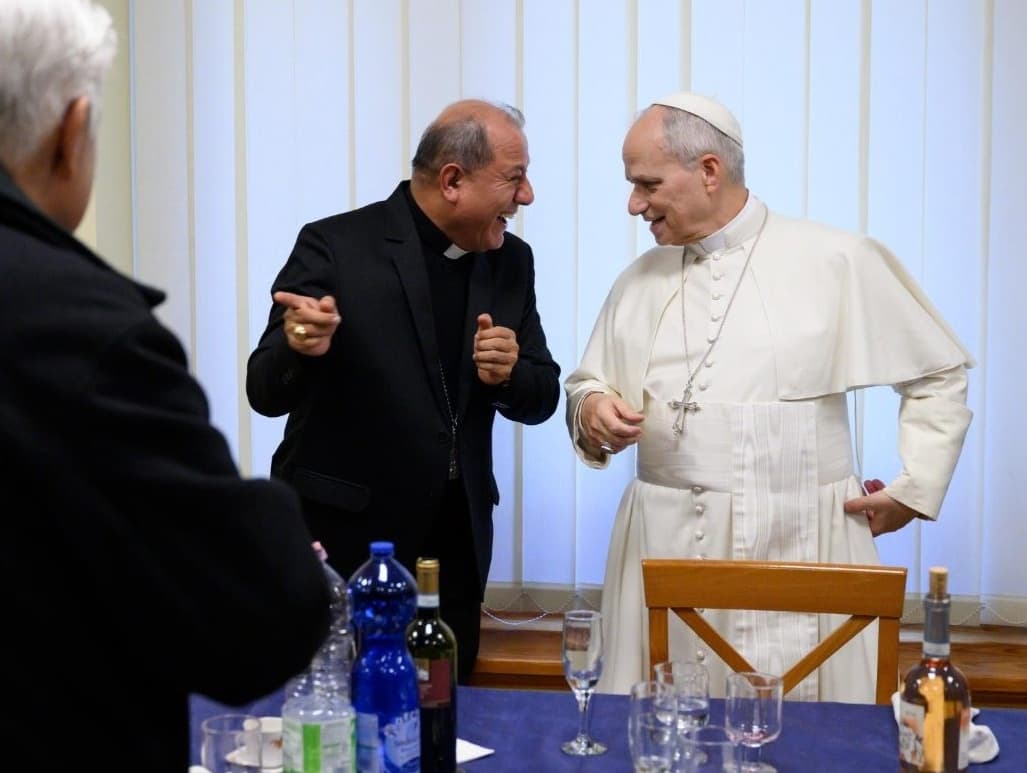
ROME – After the Peruvian bishops’ recent ad limina visit to Rome, one of the church’s shepherds said a papal visit is almost certain and highlighted several top priorities for Pope Leo.
Asked whether Pope Leo intends to visit Peru this year, Bishop Jorge Izaguirre of Chosica told Crux, “There is no doubt. No doubt.”
“It’s not up to me to confirm it,” he said, clarifying that rumors circulating that Leo himself already gave a firm confirmation to the Peruvian prelates with dates during their ad limina visit, which took place the week of Jan. 26, are “pure speculation.”
However, Izaguirre voiced confidence that Leo will likely time his visit to coincide with the 300th anniversary of the canonization of Saint Turibius, a Spanish missionary who served as archbishop of Lima for nearly 30 years and who was canonized by Pope Benedict XIII in 1726.
“We are celebrating 300 years since his canonization this year, and there is the possibility that the Holy Father might come to Peru to celebrate this with us,” he said, saying the main celebrations for the occasion will be in November.
“We are full of expectation, and the impact of this visit will be enormous – it is huge. You can only imagine it happening across the entire country,” Izaguirre said, saying the church in Peru must begin preparations immediately, especially the bishops.
“The Church in Peru and the pastors of the episcopate – have a very great responsibility. We are called to give an immense testimony to help Pope Leo fulfill his mission,” he said.
Rumors have circulated for months that Pope Leo will make a visit to South America later this year, with potential stops including Peru, Argentina and Uruguay.
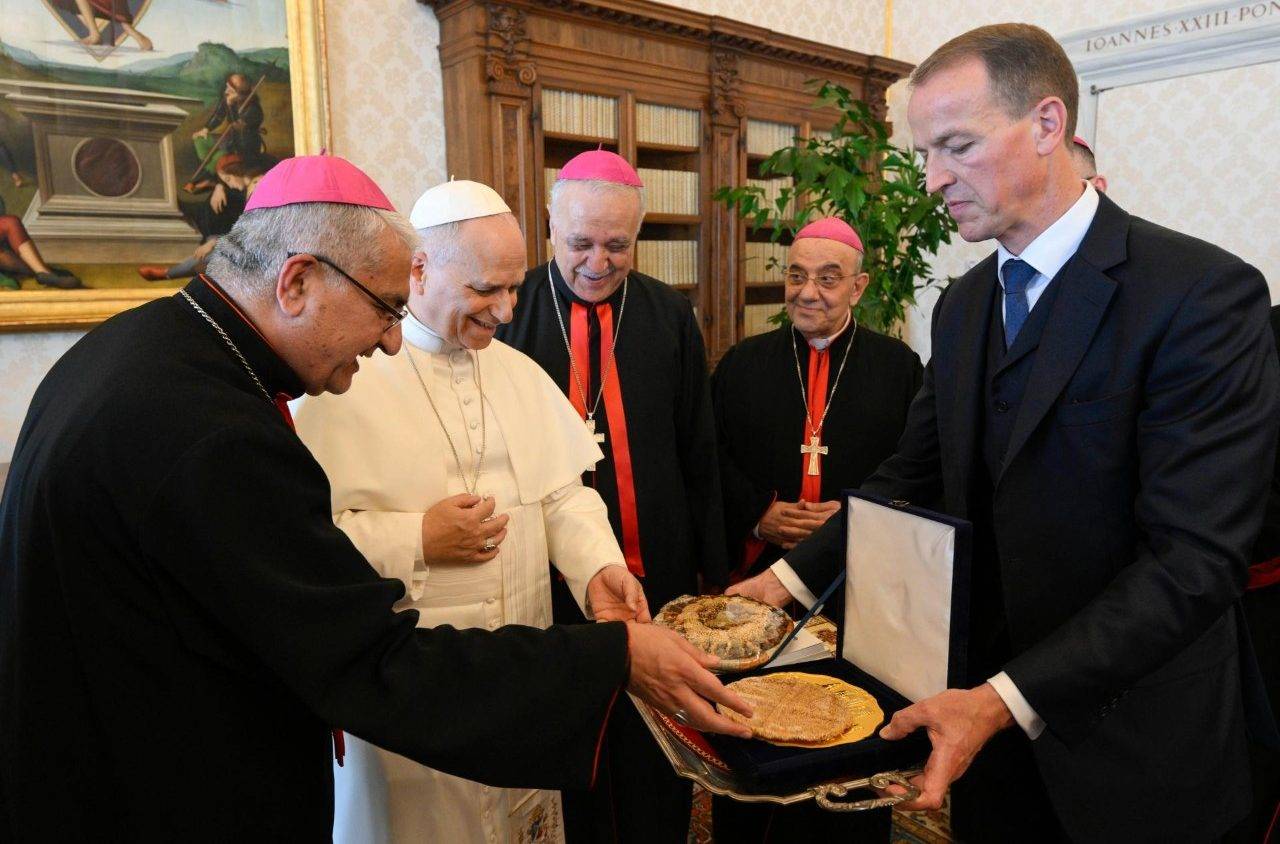
Izaguirre was one of some 50 prelates who traveled to Rome to meet with Pope Leo and various dicasteries of the Roman Curia late last month, culminating with the Jan. 31 inauguration of a new mosaic and statue of Saint Rose of Lima in the Vatican Gardens with the attendance of Pope Leo.
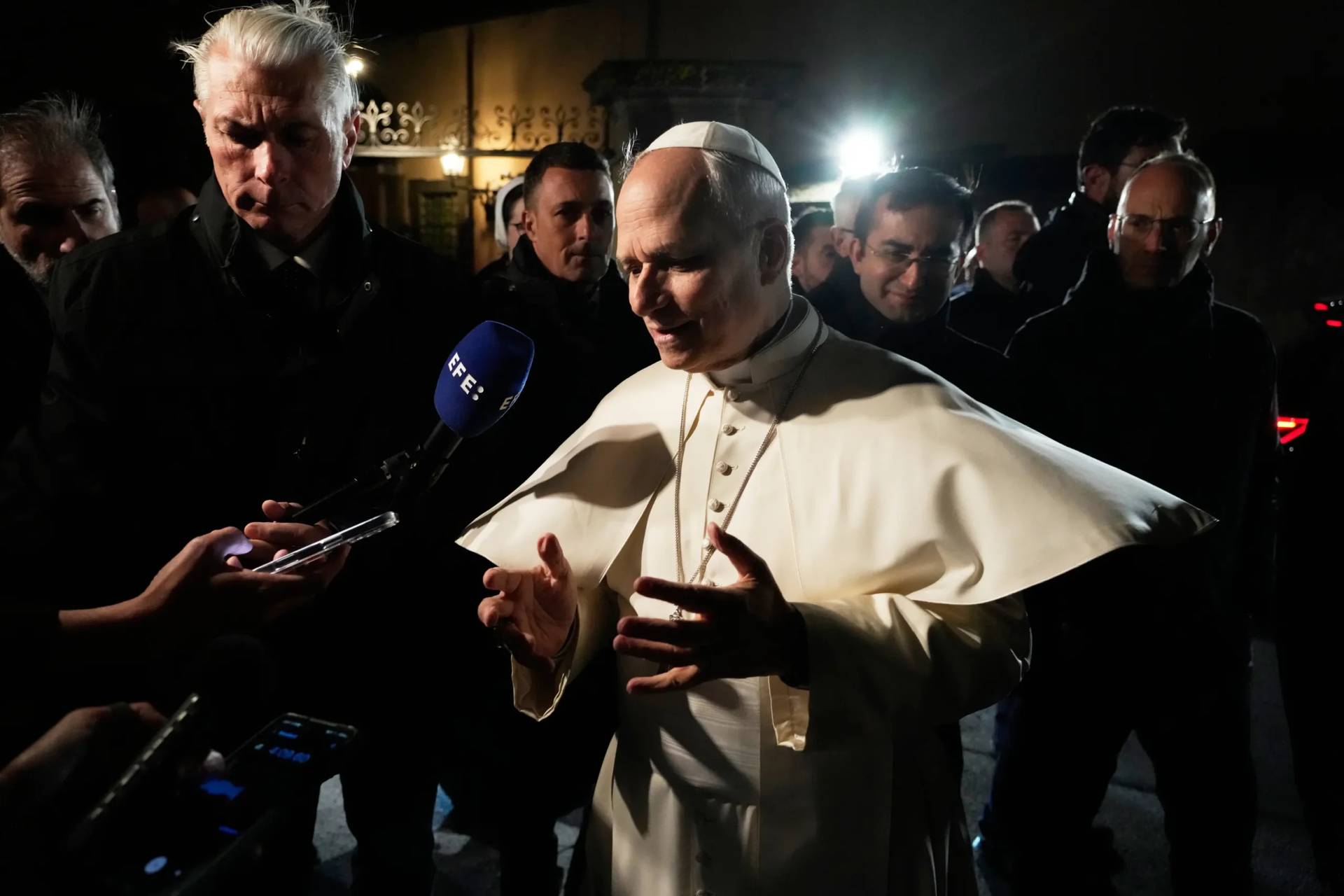
Pope Leo held a private audience with the bishops during their visit, reading a prepared speech before shifting into free conversation, and he also surprised them for lunch one day, and he also surprised guests by staying to have lunch in the gardens after the Jan. 31 event, taking time to greet attendees on his way out.
Izaguirre, who is a friend of the pope’s who worked alongside him for years in the Peruvian bishops’ Commission for Social Action when they were both overseeing dioceses in Peru, described the ad limina visit as one of fraternity.
“Pope Leo’s greatest project is to work for peace and he repeats it; to pacify the world in this moment of so much war and conflict, and we have to help him,” he said, saying the Peruvian bishops must be an example of this as an episcopal conference.
Unity was a major topic during their discussions, he said, saying the pope reminded them “that it used to be said that our episcopate was a divided one, and perhaps there is a history behind that; but he encouraged us to live in communion and unity. This point was highlighted very strongly.”
To illustrate the point, Leo, Izaguirre said, gave each of the Peruvian prelates present an identical pectoral cross, which they decided to wear together to the event in the Vatican Gardens, “to express our communion, our support and our commitment to living as a united, brotherly Episcopal Conference, with a gesture for the pope.”
“We felt heard by the dicasteries and especially by Pope Leo,” he said, saying, “The affection Pope Leo XIV has for us is evident.”
Pope Leo, he said, told the bishops that he begins and ends each day with a prayer in front of an image of the Lord of the Miracles, a popular Peruvian devotion, that they had given him.
Among the topics they discussed with the pope, following his prepared speech, were how to be close to the people, and especially the poor, invoking Pope Francis’s four levels of closeness: to God, to the Church, to reality, and to the poor.
“The other topic that came up is the issue of being a prophetic voice in the face of reality. How can we be a prophetic voice? How can we not remain quiet or silent in the face of what is happening?” he said.
Izaguirre said that Peru is a country with many challenges, and its people expect the Church to offer a message of closeness and solidarity.
To this end, he reflected on the current political situation in Peru ahead of the country’s upcoming presidential election, scheduled for April, saying the government is unstable and democracy itself “is very weak, very fragile.”
“We have just spoken about this too, because the elections are so uncertain. Every election is a total uncertainty, but this one in particular. We spoke about how there are so many candidates. That is no secret,” he said, noting that there are currently over 30 presidential candidates.
“There is a precariousness in decision-making. Not to mention the political sector, which … obeys political, individual, or partisan interests more than the interests of the country, so there is a powerful crisis unfolding,” he said.
He lamented that often, political discourse disintegrates into infighting, with leaders and candidates waging war on one another rather than seeking to help the country move forward.
The church is at risk of the same thing, he said, saying, “If we religious leaders worry about confronting one another, it wears us down. We are not fulfilling our mission, we are not focused on the essential.”
In this sense, Izaguirre said the pope’s insistence on unity, brotherhood and building bridges amid global polarization was a timely message.
Other topics they discussed included vocations, the need for a renewed commitment to the path of reform carved out by the Second Vatican Council, and the commitment to synodality amid Peru’s social and political challenges.
Pope Leo, Izaguirre said, “made it very clear to us that synodal work is key. Mission, missionary work, and synodality are two topics that the cardinals recently discussed with him, and he also guided us [in this], encouraging us to make this synodal path possible.”
For Leo, synodality is in perfect continuity with Pope Francis’s own vision, with an emphasis on listening and facilitating dialogue among everyone, including the weakest and most vulnerable.
“Broad listening is key, but the main listening is to the Holy Spirit, to the Lord. Where do you want to lead us, Lord?” he said, saying the emphasis on walking together “cannot be a mere slogan, walking together must be real.”
A sense of appreciation for everyone, no matter their vocation or social status, is needed, as well as a sense of co-responsibility for what is being done, Izaguirre said.
“Therefore, we absolutely must confront clericalism; we must confront the way we exercise power, how we use power,” but this must be done “without overstepping the institution of the Lord – of the ordained, of the ministers.”
The church has the challenge of deepening the sense of ministry of each person, whether ordained or not, “to help the church advance in fulfilling its mission, which is to proclaim the message of salvation with clarity.”
While sharing Francis’s general vision, Izaguirre said Leo has his own unique pastoral style, and will move forward in his own way.
“He does not have an explosive personality. Yes, he is a very calm personality, but he communicates a great deal through his posture, his face, and his few words,” he said, saying he believes Leo is more confident in his role as pope, and will begin action “with greater conviction.”
Yet Leo while feeling more comfortable in his new role, Leo has not lost his pastor’s heart, Izaguirre said, saying Leo believes that authority “is not about imposing oneself through power, nor separating oneself from the lives of the people, nor having friendships only with the influential.”
“To be a pastor, a bishop, and a pope of the Catholic Church today is to blend in with the People of God. It is to draw near and communicate that the Church wants to live this closeness – not to increase distances, but to foster this proximity,” he said.
In that sense, Izaguirre voiced hope that whenever Pope Leo does visit Peru, he can help spur the country in a different direction, away from corruption and toward the social development that it so desperately needs.
“There is a lot of social inequality in Peru,” and a big difference between those who live in developed urban areas, and those who live remote villages or in the Amazon, often in precarious conditions with no help from the State.
Izaguirre voiced his belief that Pope Leo through his visit “has the opportunity to say the right words, timely words that can help generate radical change in Peru, if we take these words seriously.”
This goes for the church, too, he said, saying, “the church has the mission to proclaim hope, to work for unity and communion, and to overcome divisions – but above all, to proclaim Christian hope in the Lord.”
Follow Elise Ann Allen on X: @eliseannallen